

Industrial protection gloves for the auto repair market – B2B sourcing insights
2026-08-05 16:15:42
Why are diamond-textured nitrile gloves becoming the fastest-growing segment in the global industrial protection market?
Because industrial hand protection requirements are shifting from”basic protection”to “high-performance protection”–diamond-textured gloves solve three core pain points at once:grip, durability, and safety.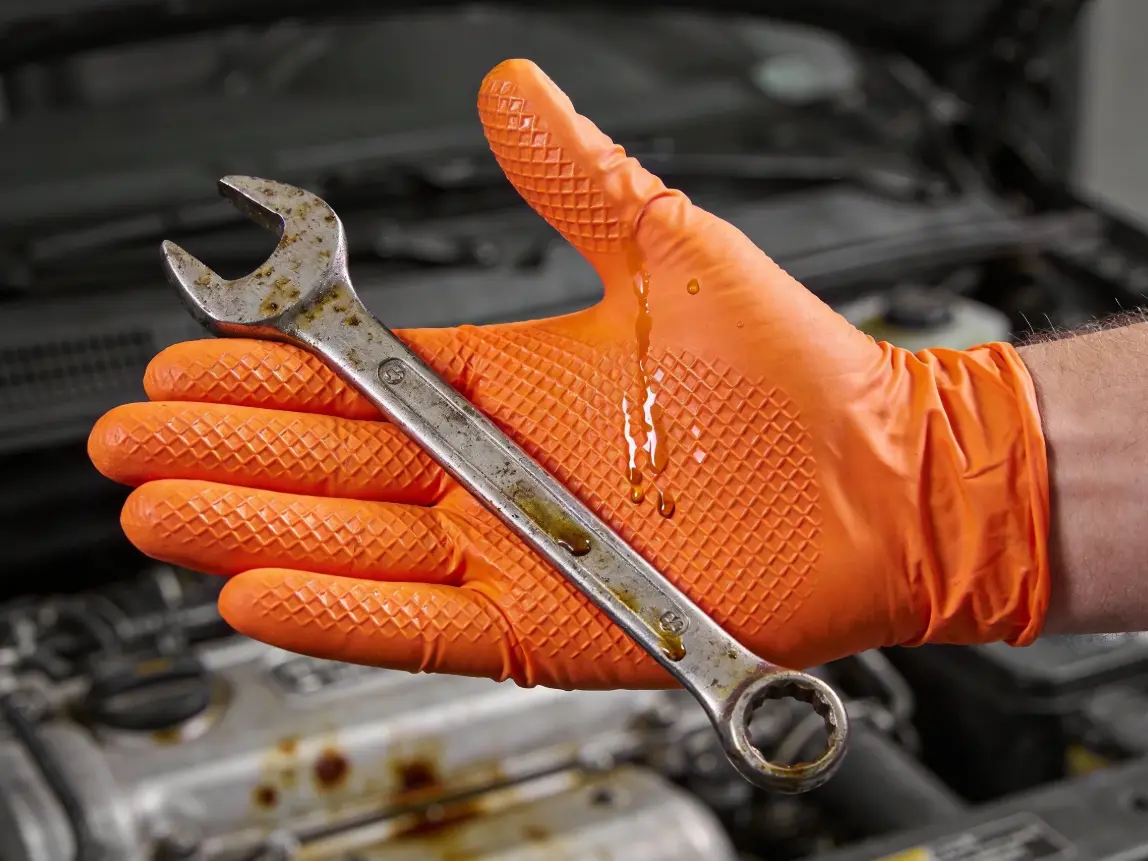
1. Global Industrial Glove Market Enters a High-Growth Phase
According to the latest industry report from Straits Research, the global industrial gloves market is experiencing significant growth:
Metric | Data |
2025 Market Size | USD 11.39 Billion |
2026 Market Size | USD 12.62 Billion |
2034 Forecast | USD 28.64 Billion |
CAGR (2026-2034) | 10.79% |
Key drivers of this growth include:
- Stricter workplace safety regulations : OSHA in the US, PPE regulations in the EU, and similar mandates are compelling industries to use compliant protective gloves
- Sustained hygiene awareness post-pandemic : demand for disposable protective gloves remains elevated across healthcare, food processing, and manufacturing
- Growing automation and robotics in manufacturing : surging demand for specialized gloves that combine high flexibility with protection
2. Nitrile Gloves :The Dominant Material in Industrial Protection
In the industrial gloves market, industrial nitrile gloves lead globally due to their superior durability, chemical resistance, and allergy-free properties.
Core Advantages of Nitrile Gloves in Industrial Applications:
Advantage | Description |
Superior Durability | Excellent puncture and tear resistance for heavy-duty applications |
Chemical Resistance | Resistant to oils, solvents, acids, and alkalis – preferred in automotive and chemical industries |
Allergy-Free | Contains no latex proteins – zero allergy risk |
Flexibility & Comfort | Modern formulations balance flexibility and tactile sensitivity for precision work |
The global nitrile gloves market is projected to grow from USD 6.63 billion in 2025 to USD 10.28 billion by 2030, at a compound annual growth rate (CAGR) of 9.18%. On the industrial application side, key consumer sectors include automotive, food processing, construction, oil and gas,and chemicals.
3. Diamond-Textured Nitrile Gloves:The Differentiated Choice for Industrial Scenarios
Within the industrial nitrile glove market,“diamond texture” design has become standard for demanding applications. This design is not decorative – it‘s an engineering solution addressing real operational pain points.
Core Value of Diamond Texture:
Enhanced Grip: The raised diamond pattern provides “1.5 to 4 times” more grip than standard gloves in oily and wet conditions. Industry product data shows Raised Diamond Texture (RDT) increases contact surface area by over 60% compared to ordinary gloves,maintaining excellent grip even when handling oils, water, or chemicals.
Oil Drainage: The textured grooves allow oils and liquids to drain away from the contact surface, keeping the palm in direct contact with the workpiece.
Durability Enhancement: Diamond-textured gloves typically feature 8-12 mil thickness – 2-3 times thicker than standard nitrile gloves – significantly extending service life per pair.
High-Visibility Safety: Orange nitrile gloves are highly visible in dark engine bays, workshops, and construction sites – facilitating safety management and dropped item retrieval.
4. Real User Feedback:From“Cheapest Option” to “Durable Choice”
Industry observations show that glove procurement logic in auto repair and manufacturing is shifting. Feedback from an auto repair professional reflects a common sentiment:
“Modern vehicles are more advanced than ever. Whether you’re dealing with tight engine compartments, scorching components, or unpredictable messes, your hands are on the front lines every day. That’s why glove quality matters -and why the right nitrile gloves for auto repaire can make your job safer, cleaner, and more efficient.”
Why is auto repair the largest demand source for diamond-textured gloves?
Challenge | Diamond-Textured Glove Solution |
Repeated skin exposure to oils and brake fluids | 8-12 mil nitrile provides complete barrier protection |
Sharp edges and threads tear thin gloves | Excellent puncture resistance – 2-3x longer service life |
Oily tools slip, impacting efficiency and safety | Diamond texture grip increases by over 60% |
Lost gloves are hard to find | High-visibility orange – easy to spot |
5. Industry Trends:Key Variables in the 2026 Glove Market
Trend 1: Raw Material Costs Driving Glove Prices Up
Entering 2026, the disposable glove market remains stable from a demand perspective but increasingly volatile from a cost standpoint. Nitrile and vinyl gloves rely heavily on oil-derived synthetic materials – ongoing geopolitical conflict has disrupted global oil supply, driving up NBR costs . Raw materials account for “60%-70%” of nitrile glove production costs.
Implications for Buyers:
- Spot orders and short-term sourcing carry increasing risk
- Strategic sourcing and “long-term contracts” are recommended
- Choose suppliers with stable raw material supply assurance
Trend 2:Global Production Capacity Landscape Continues to Reshape
Malaysian manufacturers still hold approximately 45% of global nitrile glove production capacity, but Chinese companies are accelerating global expansion through Southeast Asian production bases – overseas capacity share reached 35% in 2024.
U.S. tariff policy is a key variable affecting global glove trade flows. Disposable gloves from China face import tariffs ranging from 19% to 70%, with an additional 50% tariff imposed starting January 2026. This is driving procurement demand toward Southeast Asia, including Malaysia, Vietnam, and Indonesia.
Trend 3:Structural Growth Continues on the Demand Side
Despite price fluctuations and supply chain challenges, demand for disposable gloves remains stable and recessionresistant, particularly in the medical and industrial sectors. Nitrile gloves continue to replace latex and PVC gloves in both medical and nonmedical applications, driven by advantages such as puncture resistance and low allergenicity.
6. Recommendations for B2B Buyers
In the current market environment, when procuring heavy duty nitrile gloves, focus on the following:
Dimension | Recommendation |
Thickness | 8-12 mil for industrial use, standard for light-duty |
Supplier Verification | Verify raw material sources, certifications, and batch traceability |
Long-Term Contracts | Sign long-term contracts to lock in pricing during cost-rising cycles |
Sample Testing | Conduct field-testing before bulk purchasing |
7. Conclusion
The global industrial glove market is expanding at over 10% CAGR, projected to reach USD 28.6 billion by 2034 . Within this growth wave, diamond-textured nitrile gloves – with their comprehensive advantages in grip, durability, and safety – are becoming the “preferred protective equipment” for demanding scenarios including auto repair, construction, and manufacturing.
For B2B buyers, understanding the market positioning and application value of diamond-textured nitrile gloves means meeting end-user protection requirements while achieving “lower total procurement costs” through extended per-pair service life.
“BORAN Medical” supplies a full range of diamond-textured nitrile gloves in orange and black, 8-12 mil thickness, compliant with EN388/EN374 industrial protection standards. Full compliance documentation and batch test reports available. Video factory tours and sample testing supported.