

PVC vs Nitrile Gloves: Which One for Medical or Industrial Use?
2026-06-12 09:20:16
PVC gloves or nitrile gloves — which is better?
It depends on your application, budget, and safety requirements.There is no single "best" glove — only the right one for your needs.This guide compares PVC and nitrile gloves across six factors:Material strength and durability,Chemical and oil resistance,Allergen safety,Comfort and fit,Cost,Environmental impact
Whether you are sourcing for a hospital, a food processing plant, or a janitorial service, this comparison will help you make an informed decision.
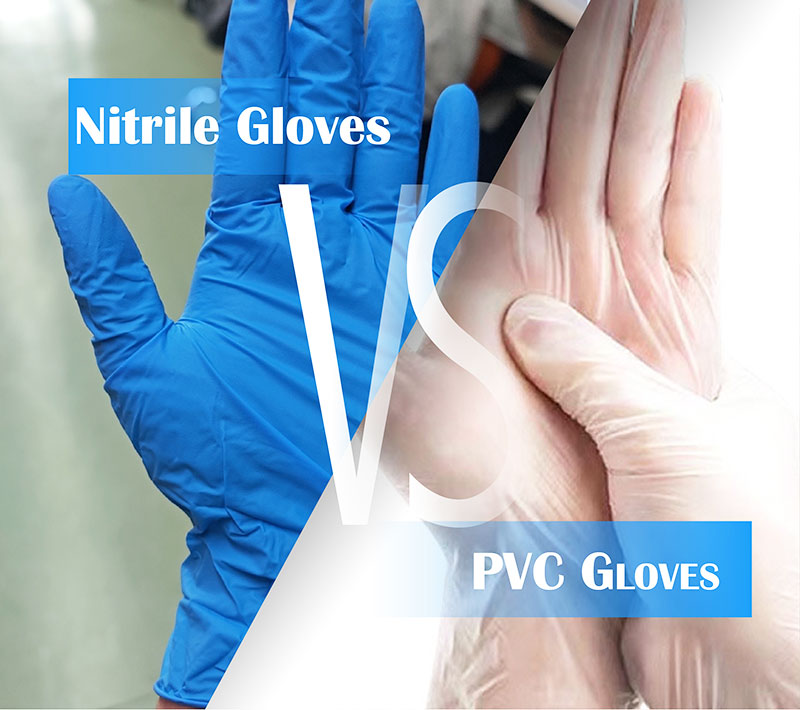
1. What Are PVC Gloves and Nitrile Gloves?
PVC Gloves (Vinyl Gloves)
PVC gloves, also commonly called vinyl gloves, are made from polyvinyl chloride plasticizers. They are a popular low-cost option in the disposable glove market. PVC gloves offer a loose fit and are typically powdered or powder-free. They are widely used in food service, light cleaning, and low-risk medical examinations where tactile sensitivity is not critical. Because PVC is a thermoplastic, these gloves are not as elastic as nitrile or latex, but they provide adequate barrier protection for brief, low-risk tasks.
Nitrile Gloves
Nitrile gloves are made from synthetic acrylonitrile-butadiene rubber. They were originally developed as a latex-free alternative for healthcare workers and patients with Type I latex allergies. Nitrile gloves offer superior puncture resistance, chemical splash protection, and a snug, form-fitting feel that closely mimics the elasticity of natural rubber latex. Medical-grade nitrile gloves meet strict FDA and ASTM standards and are the preferred choice in hospitals, laboratories, and industrial environments where barrier integrity is paramount.
2. PVC vs Nitrile Gloves: Head-to-Head Comparison
Below is a detailed comparison across every factor that matters when choosing between PVC and nitrile gloves.
Material Strength and Durability
Nitrile glovesare significantly stronger than PVC gloves. Nitrile has three to five times the tensile strength of PVC, meaning it resists tearing and puncturing far better during use. In a laboratory puncture test, nitrile gloves typically withstand over 4 Newtons of force, while PVC gloves tear at around 1–2 Newtons. For tasks that involve handling sharp instruments, needles, or rough materials, nitrile is the clear winner.
PVC glovesare more prone to tearing, especially if the wearer has long fingernails or if the glove snags on equipment. They work well for short-duration, low-risk tasks but are not recommended for procedures requiring sustained barrier protection.
Chemical and Oil Resistance
Nitrile gloves offer excellent resistance to a wide range of chemicals, including oils, greases, acids, and solvents. This makes them the standard choice in automotive workshops, chemical handling, and laboratory settings. PVC gloves, by contrast, have poor resistance to oils and many organic solvents. Exposure can cause PVC to swell, degrade, or leach plasticizers, compromising the barrier. In food service, PVC handles light grease well enough for tasks like preparing sandwiches, but it should not be used with hot oils or aggressive cleaning chemicals.
Allergen Safety
Both PVC and nitrile gloves are latex-free, making them safe for individuals with latex allergies. However, PVC gloves may contain phthalate plasticizers (e.g., DEHP) that have raised health concerns in prolonged medical use. Nitrile gloves, especially medical-grade, are phthalate-free and biocompatible per ISO 10993 standards. For anyone with sensitive skin or chemical sensitivities, nitrile is the safer choice.
Comfort, Fit, and Tactile Sensitivity
Nitrile gloves provide a snug, ergonomic fit with excellent tactile feedback. Modern nitrile formulations are soft and flexible, reducing hand fatigue during extended wear. PVC gloves have a looser, less elastic fit and tend to "bag" at the fingertips, which reduces dexterity and sensitivity. For tasks requiring fine motor control — such as assembling small parts or performing medical examinations — nitrile gloves are far superior.
Cost Comparison
PVC gloves are the most affordable disposable glove option, typically costing 30–50 % less than nitrile gloves of equivalent thickness. This makes PVC attractive for high-volume use in food service and cleaning where glove changes are frequent. Nitrile gloves command a premium price due to their superior material properties and manufacturing complexity. However, the higher cost of nitrile is often offset by lower failure rates — fewer torn gloves mean less waste and better protection.
3. When to Choose PVC Gloves vs Nitrile Gloves
Choose PVC Gloves When…
· Budget is the primary concern and glove usage exceeds 1,000 pieces per month.
· Tasks are short-duration and low-risk (e.g., food preparation, light cleaning).
· You need a loose fit for quick donning and doffing.
· Chemical or oil exposure is minimal or absent.
· You are handling non-hazardous materials in food service or hospitality.
Choose Nitrile Gloves When…
· You need maximum puncture and tear resistance (medical exams, dental procedures).
· Workers handle chemicals, solvents, oils, or biohazards.
· Latex allergy safety is a requirement for patients or staff.
· Extended wear comfort and tactile sensitivity are important.
· Regulatory compliance requires medical-grade barrier protection (FDA 510(k), ASTM D6319).
· You are sourcing for laboratories, pharmaceutical manufacturing, or cleanrooms.
4. Environmental Considerations
Both PVC and nitrile gloves present environmental challenges because they are single-use and not biodegradable. PVC production releases dioxins and relies on chlorine chemistry, which has a higher environmental footprint. Nitrile gloves, being synthetic rubber, do not generate dioxins during manufacturing but are still petroleum-based. Neither type should be incinerated in open environments. For eco-conscious buyers, look for nitrile gloves from suppliers using sustainable manufacturing practices or consider recycling programs for nitrile glove waste.
5. Certification and Standards
Medical-grade gloves must meet specific regulatory standards. Nitrile medical exam gloves are regulated under ASTM D6319 and require FDA 510(k) clearance. PVC medical gloves follow ASTM D5250. Industrial gloves follow ASTM D6978 for chemical permeation resistance. Always verify that your supplier provides certificates of analysis (COA) and that their products meet the applicable standards for your region. At Boran Medical, all our disposable gloves are manufactured in ISO 13485-certified facilities and comply with international quality standards.
Conclusion: Which Glove Wins?
There is no single "best" glove — the right choice depends on your use case.For medical, laboratory, and industrial applications requiring strength, chemical resistance, and allergy safety, nitrile gloves are the gold standard.For low-risk, high-volume tasks in food service and general cleaning where budget is the deciding factor, PVC gloves provide a cost-effective solution.
At Boran Medical, we offer both high-quality PVC and nitrile gloves in a range of sizes, thicknesses, and certifications. Contact our team today to request samples or discuss your sourcing needs. Visit boranmedical.com for more information about our full product line.